12 Years of Modi Government Created an Aspirational India: Dr. Jitendra Singh
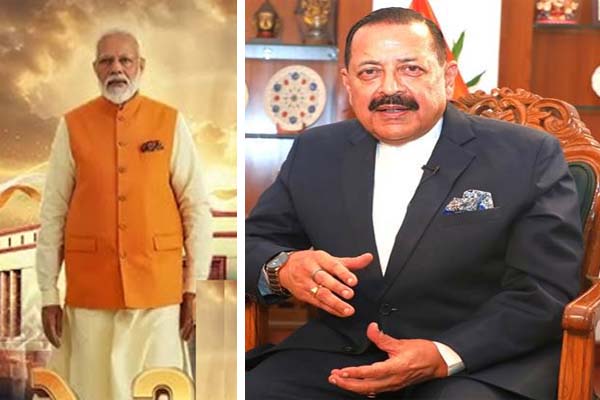
Twelve years of the Narendra Modi government have transformed India into an aspirational nation driven by opportunity, innovation and self-belief, Union Minister Dr. Jitendra Singh said on Sunday while talking to media, asserting that governance reforms, technological democratisation and citizen-centric policies have fundamentally changed the way Indians perceive their prospects. The Minister also outlined the next phase of growth, stating that India’s space economy, currently close to $9 billion, is expected to expand to about $45 billion over the next seven to eight years as the country advances towards the goal of becoming a developed nation by 2047.
Reflecting on Prime Minister Narendra Modi’s 4,399 days in office as a continuously serving elected Prime Minister, Dr. Jitendra Singh highlighted a range of measurable outcomes over the past decade. He said India’s space startup ecosystem had grown from a single-digit number of startups a few years ago to around 400 today, with one startup recently attaining unicorn status. India’s space economy is now valued at nearly $9 billion and is projected to reach $45 billion by the end of the next seven to eight years.
The Minister said the country’s startup ecosystem had expanded from about 350-400 startups in 2014 to more than 2.3 lakh at present, generating nearly 24-25 lakh jobs. Nearly half of these startups are located in Tier-II and Tier-III cities, while 35-39 per cent are women-led. He also noted that a recent space launch witnessed the participation of around 1,500 media personnel and nearly 10,000 spectators, reflecting growing public engagement with science and technology.
Dr. Jitendra Singh said some of the government’s earliest reforms symbolised a shift towards a citizen-centric governance model. He cited the decision to end the requirement of gazetted-officer attestation of documents and permit self-attestation as a landmark step that signalled trust in citizens, particularly the youth. The Minister also referred to the abolition of interviews in several categories of government recruitment, saying the move reduced opportunities for nepotism, discretion and malpractice while strengthening merit-based selection. These reforms helped create confidence that success could be achieved through ability and hard work rather than influence or recommendation, the Minister added.(UPDATED ON 7TH JUNE 2026)