Cabinet Approves Two Elevated Corridors To Decongest Varanasi And Improve Urban Mobility
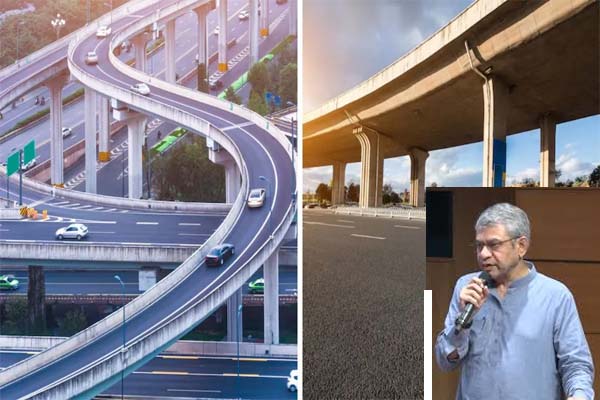
The Union Cabinet today approved a 6-lane Greenfield Elevated Corridor covering over 46 kilometer between National Highway-19 and Varanasi Ring Road in Uttar Pradesh on Hybrid Annuity Model, improving urban mobility. Briefing media in New Delhi today, Information and Broadcasting Minister Ashwini Vaishnaw said that the total capital cost of the project stands over 14 thousand 4 hundered crore rupees and will provide seamless connectivity between NH-19 and the Varanasi Ring Road, significantly decongesting the city’s road network and improving urban mobility. It is expected to reduce the average travel time across the project influence area from approximately 60 minutes to 20 minutes. He added that the project will significantly improve connectivity to major religious, educational and cultural landmarks.
The Union Cabinet has also approved development of around 43 kilometer 6 and 4 lane Elevated Corridor along Varuna River Bank in Uttar Pradesh at total Capital Cost of around 11 thousand crore rupees. Mr Vaishnaw said that the corridor is a major component of the Varanasi Decongestion Plan and will provide seamless connectivity between NH-31 and Kashi Railway Station. He said, it will also substantially improve access to Varanasi Ring Road, Varanasi Airport, Kashi Railway Station,Varanasi Junction, Deen Dayal Upadhyaya Junction.
The Union Cabinet has approved Semicon 2.0 programme with a budgetary outlay of 1 lakh 27 thousand 500 crore rupees tofor the development of India’s semiconductor design and manufacturing ecosystem. Addressing media, Information and Broadcasting Minister Ashwini Vaishnaw said that building on the momentum of Semicon 1.0, the scheme aims to further the government’s commitment to putting India on the global semiconductor map.
Mr Vaishnaw also stated that given the growing global interest in India’s semiconductor programme, every major industry leader wants to establish a presence in the country. He added that India has already forged partnerships with the US, Japan, the EU, the Netherlands, Singapore, and Germany. He informed that under Semicon 2.0, investment worth four lakh crore rupees is expected.
The Union Cabinet also approved the Mobile Phone Manufacturing Scheme ((MPMS) with a budgetary outlay of 62 thousand 500 crore rupees. Mr Vaishnaw said that the scheme will be implemented for the next 5 years. He said that the scheme will provide incentive support of 2.25 percent to 5 percent on eligible sales for manufacturing mobile phones in the country.
The Union Cabinet also approved the National Investment Policy for Urea-2026 for Atmanirbhar Bharat (NIPU-2026). Mr Vaishnaw said that the Policy seeks to encourage new investments in urea sector for setting up gas-based urea manufacturing units in the country, helping achieve the goal of self-sufficiency.
The Union Cabinet approved two multitracking projects covering four districts across Odisha and Jharkhand, expanding the Indian Railways network by about 145 kms. The Project includes Paradeep-Haridaspur Doubling in Odisha and Rajkharsawan-Dangoaposi 4th Line in Jharkhand. With total estimated cost of approximately 3 thousand 907 crore rupees, the projects are expected to be completed by 2030-31.(UPDATED ON 15TH JULY 2026)