Madhya Pradesh Waqf Board- 2 Hindu members part of board
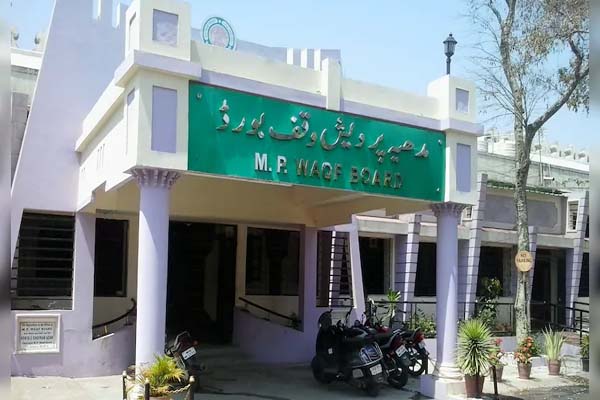
The biggest news at this moment is coming from political and administrative circles. In fact, after a highly significant decision by the Chief Minister of Madhya Pradesh, Dr. Mohan Yadav, Madhya Pradesh has become the first state in the country to reconstitute its Waqf Board under the new Waqf Act. Implementing this decision, the state government has also issued an official notification in the Madhya Pradesh Gazette.
According to the new notification issued by the state government, the leadership of the newly constituted Madhya Pradesh Waqf Board has been entrusted to Sanwar Patel, who will serve as its chairman. A total of 10 members have been included in the board. The government has constituted the new board under the provisions of Section 14 by exercising the powers under Section 13(1) of the Waqf Act, 1995 (Amended 2025).
The aspect of this entire reconstitution that has attracted the most attention and is being regarded as a major change in the country’s administrative history is the inclusion of two Hindu members on the board. The Dr. Mohan Yadav government has appointed Manoj Malpani from Indore and Animesh Bhargava from Raghogarh (Guna) as members of the newly formed Waqf Board. Under the new rules, Madhya Pradesh has become the first state in the country to take such a step.
Looking at the list of the new Waqf Board, it includes several prominent names from politics as well as the administrative sector. Among the board members is Najma Heptulla, whose term remains valid until April 18, 2028; therefore, she has been retained in the new list for the remainder of her tenure. Apart from her, the board includes Atif Aqeel, MLA from Bhopal North; Faizan Khan from Ujjain; Fatema Chaudhary from Indore; Shaista Sultan, a councillor from Berasia, Bhopal; Shabana Khan, a councillor from Ratlam; and the Commissioner for Backward Classes and Minority Welfare as an ex officio member.
Ever since the central government amended the Waqf Act, there had been widespread speculation across the country about its implementation. In this context, Madhya Pradesh acted first by not only constituting the board but also including non-Muslim members, once again bringing the issue into the spotlight.(UPDATED ON 5TH JULY 2026)