Ashwini Vaishnaw Outlines India’s AI Priorities for Manufacturing Engineering Technology
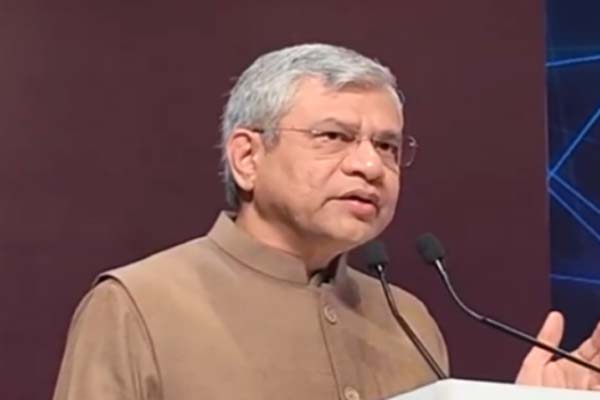
The Union Minister for Electronics and Information Technology, Ashwini Vaishnaw, today chaired a strategic convening of industry leaders and global academicians, policymakers and technology experts to articulate India’s AI priorities especially for the Manufacturing Engineering Technology (MET) ecosystem with a strong focus on adoption, skills development and inclusive growth.
At the India AI Impact Summit 2026, this convening was curated by NAMTECH under the leadership of Ministry of Electronics & Information Technology (MeitY). It brought together academicians from Massachusetts Institute of Technology (MIT), Indian Institute of Technology Madras (IIT-M), and other prominent universities alongside C-suite executives from industry such as from Microsoft India, Dell Technologies, Cisco India, Hitachi India, Tata Electronics, Rockwell Automation, Palo Alto Networks, PayPal, and Intel among others.
The industry-academia-government discussion featuring leading industry and academic leaders highlighted AI as a foundational enabler of productivity, competitiveness and innovation across India’s industrial sectors, aligned with the national vision of Viksit Bharat @2047.
Prof. Eric Grimson, Chancellor for Academic Advancement, Massachusetts Institute of Technology (MIT), Boston, USA, added:“The next phase of India’s AI journey will be defined by its ability to move from capability to application – embedding AI across industry, enterprises and MSMEs, investing in skills at scale, and ensuring that innovation remains inclusive. This requires sustained collaboration across academia, industry and government to build systems that can translate research and technology into real-world outcomes.”
Mr. Pravin Panchagnula, Executive Director – Manufacturing & Conglomerates, Microsoft India remarked: “The impact of AI in India’s industrial sectors will be determined by its deployment on the shop floor and across complex engineering systems. Enabling adoption among MSMEs, alongside targeted skilling and upskilling of the workforce, will be essential for building resilient and globally competitive manufacturing value chains.”
Mr. Vinod Karumampoyil Director – Digital Transformation, Cisco India added: “As AI becomes integral to modern manufacturing, building strong application-oriented skills across the workforce is essential. Closer collaboration between industry and academic institutions will be key to ensuring that talent is prepared to deploy AI responsibly and at scale, strengthening productivity and competitiveness across India’s manufacturing ecosystem.”
Ms. Swapna Bapat, MD & Vice President – India & SAARC, Palo Alto Networks remarked: “In the landscape of cybersecurity and IT, poorly designed Operational Technology (OT) poses a significant risk. Designing a secure, enterprise-grade network requires three critical elements. As AI becomes a cornerstone of modern manufacturing, we must prioritize building application-oriented skills across the workforce. Our goal is to bridge the gap between education and industry, bringing modern network security principles into schools to ensure students are ready for immediate workplace deployment.”
Mr. Dilip Sawhney, Managing Director – India, Rockwell Automation added: “For India’s manufacturing sector, the real impact of AI will be realised when it is integrated into industrial automation systems and deployed at scale across production environments. Bridging the gap between digital innovation and shop-floor execution requires strong collaboration between industry, academia and government. Initiatives such as this create the ecosystem needed to accelerate adoption, strengthen workforce capability, and enhance the global competitiveness of India’s manufacturing value chains.”
Dr. Ibrahim Hafeezur Rehman, Operating Director General & CEO, NAMTECH remarked: “By grounding education in real-world industrial contexts, NAMTECH aims to show how application-oriented learning can enable day-zero deployment of talent into production environments. Through the MET Platform and partnerships with industry and academia, this approach can help shape scalable models for preparing the workforce for India’s Manufacturing Engineering Technology transformation.”(updated on 18th feb 2026)