India’s GDP growth for FY26 is estimated at 7.4 per cent

India’s GDP growth for FY26 is estimated at 7.4 per cent driven by the double engine of consumption and investment. It reaffirms India’s status as the fastest-growing major economy for the fourth consecutive year.
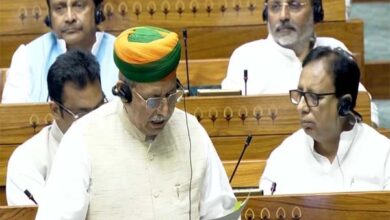
This was highlight of the Economic Survey 2025-26 tabled by the Union Minister for Finance and Corporate Affairs, Smt. Nirmala Sitharaman in Parliament today.
The Survey says the real GDP growth for FY27 is projected at 6.8-7.2 per cent, while the potential growth for India is estimated at around 7 per cent.
The Survey points out that the domestic demand continues to underpin economic growth in FY26. According to the First Advanced Estimate, the share of final private consumption expenditure (PFCE) in GDP rose to 61.5 per cent in FY26. This strength in consumption reflects a supportive macroeconomic environment, characterised by low inflation, stable employment conditions, and rising real purchasing power. Moreover, steady rural consumption, bolstered by strong agricultural performance, and the gradual improvement in urban consumption, aided by the rationalisation of direct and indirect taxes, reaffirm that the momentum in consumption demand is broad-based.
Along with consumption, investment has continued to anchor growth in FY26, with the share of gross fixed capital formation (GFCF) estimated at 30.0 per cent. Investment activity strengthened in the first half of the year, with, GFCF expanding by 7.6 per cent, exceeding the pace recorded in the corresponding period last year and remaining above the pre-pandemic average of 7.1 per cent.
The Survey highlights that Agriculture and allied services are estimated to grow by 3.1 per cent in FY26. Agricultural activity in first half of FY26 was supported by a favourable monsoon. Agricultural GVA grew by 3.6 per cent, higher than the 2.7 per cent growth recorded in first half of FY25, but remained below the long-term average of 4.5 per cent. Allied activities, particularly livestock and fisheries, have grown at relatively stable rates of around 5-6 per cent. As their share in agricultural GVA has increased, aggregate agricultural growth has increasingly reflected a weighted outcome of volatile crop performance and a relatively stable expansion in allied sectors.
The Economic Survey mentions that the industrial sector is showing signs of strength, with manufacturing growing by 8.4 per cent in the first half of FY26, surpassing the FY26 estimate of 7.0 per cent. Additionally, the construction industry has remained resilient, underpinned by sustained public capital expenditure and ongoing momentum in infrastructure projects. The manufacturing sector share has remained steady at around 17-18 per cent in real (constant) price terms. Manufacturing’s gross value of output (GVO) has remained broadly stable at around 38 per cent, comparable to services, indicating that output has been sustained. Moreover, in FY26, the industrial sector is expected to gain momentum, growing at 6.2 per cent, up from 5.9 per cent in FY25. The high-frequency indicators for Q3 of FY26, including the PMI manufacturing, IIP manufacturing, and e-way bill generation, signal a strengthening of manufacturing activity underpinned by robust demand. Construction indicators, such as steel consumption and cement production, have witnessed a steady growth. Looking ahead, momentum in industrial activity is expected to remain buoyant, boosted by the rationalisation of GST and a favourable demand outlook.
The Survey states that the momentum in domestic demand and capital formation observed in FY26 has been underpinned by a prudent fiscal policy strategy, characterised by steady revenue mobilisation and calibrated expenditure rationalisation.
Markets have acknowledged and rewarded the government’s commitment to fiscal discipline through lower sovereign bond yields, with the spread over U.S. bonds declining by more than half .
Alongside the fiscal stimulus provided by higher public capital expenditure and tax reductions, monetary support was delivered through a cumulative reduction of 125 basis points in the policy repo rate since February 2025 (as inflationary pressures moderated), complemented by an injection of durable liquidity via cash reserve ratio cuts (₹ 2.5 lakh crore), open market operations (₹6.95 lakh crore) and forex swap of around $25 billion.
The Economic Survey mentions that against a backdrop of global trade uncertainty, India’s total exports (merchandise and services) reached a record USD 825.3 billion in FY25, with continued momentum in FY26. Despite heightened tariffs imposed by the United States, merchandise exports grew by 2.4 per cent (April–December 2025), while services exports increased by 6.5 per cent. Merchandise imports for April-December 2025 increased by 5.9 per cent.
India’s external sector is placed comfortably in the short run. Forex reserves cover over 11 months of imports as of 16 January 2026 and approximately 94.0 per cent of the external debt outstanding as of the end of September 2025, offering a comfortable liquidity cushion.
The Union government’s landmark step of notifying the implementation of the Labour Codes marks a significant reform in the regulatory framework.
The FY26 was an unusually challenging year for the economy on the external front. Heightened uncertainty in global trade and the imposition of high, penal tariffs created stress for manufacturers, particularly exporters, and affected business confidence.
The outlook for the global economy remains dim over the medium-term, with downside risks dominating. At the global level, growth is expected to remain modest, leading to broadly stable commodity price trends. Inflation across economies has trended downward, and monetary policies are therefore expected to become more accommodative and supportive of growth.
The Survey points out that the global environment remains fragile, with growth holding up better than expected but risks elevated amid intensifying geopolitical tensions, trade fragmentation and financial vulnerabilities.
Against this backdrop, the domestic economy remains on a stable footing. Inflation has moderated to historically low levels, although some firming is expected to occur going forward. Balance sheets across households, firms and banks are healthier, and public investment continues to support activity.
Importantly, the cumulative impact of policy reforms over recent years appears to have lifted the economy’s medium-term growth potential closer to 7 per cent.
(UPDATED ON 29TH JANUARY 2026)