UNICEF , PIB, and AIIMS, Nagpur Conclude Media Capacity-Building Workshop
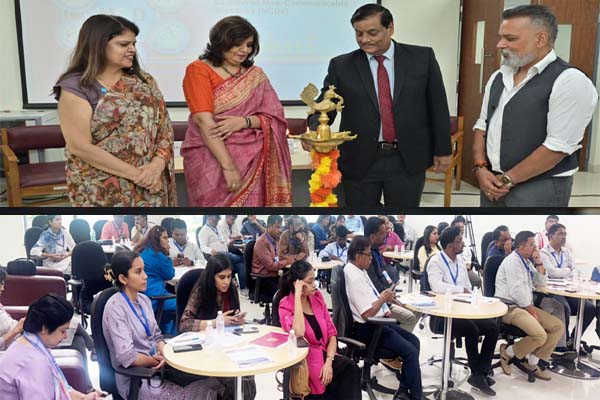
Over 30 media persons from Western India came together to strengthen coverage on childhood non-communicable diseases (NCDs) at a two-day media capacity-building workshop that concluded today at AIIMS, Nagpur.
The workshop was co-organized by UNICEF India, Press Information Bureau (Western Zone) and AIIMS Nagpur. During the workshop the media persons gained direct exposure to how childhood NCDs are diagnosed, treated and managed and best practices to enhance health reporting.
The workshop was aimed at highlighting the rising risk of NCDs among children aged 5 to 9 and adolescents aged 10 to 19. While childhood NCDs in tribal and rural parts of western and central India often unfold alongside the limited access to diagnosis and specialist care, urban centres are witnessing a parallel rise in conditions such as childhood obesity, diabetes and mental health disorders, driven by sedentary lifestyles, screen time and dietary changes. Childhood conditions frequently remain undetected until complications develop, whether in rural, tribal or urban settings.
Speaking on the ocassion, Smita Vats Sharma, Director General, Press Information Bureau (Western Zone), Ministry of Information and Broadcasting, said, “Public health reporting shapes awareness and public action. Journalists have an important responsibility to present evidence-based information and tell stories that help citizens understand emerging health challenges affecting children.”
Dr Prashant Joshi, Executive Director, AIIMS Nagpur, said, “Childhood non-communicable diseases have a long incubation period and start from childhood; hence, it is imperative and important to demand early diagnosis, continuous care and strong public health systems. AIIMS Nagpur is committed to developing models of care that can be scaled across the country. The media can help families recognise symptoms early and encourage timely treatment.”
Zafrin Chowdhury, Chief of Communication, Advocacy and Partnership, UNICEF India, said, “When the media reports on childhood NCDs with accuracy and compassion, it shines light on a hidden issue, encourages early detection, challenges stigma, and reinforces that these conditions are preventable and treatable. UNICEF is proud to partner with PIB, AIIMS Nagpur and journalists to amplify these stories. Together, we can inform, inspire action, and help children survive and thrive.”
Dr Tushar N Nale, ADG, DGHS, Ministry of Health and Family Welfare, gave an overview of the government’s NCD programme.
Sanjay Singh, Chief of UNICEF Maharashtra, said, “Childhood NCDs are no longer rare conditions. They are an emerging public health priority. Through our partnership with AIIMS Nagpur and the Government of Maharashtra, we are working to strengthen early detection, referral systems and quality care so that every child receives the support they need.”(UPDATED ON 14TH JULY 2026)