Budget 2026 pushes Technology-driven AI-integrated Structural Reforms to Shape India’s Future
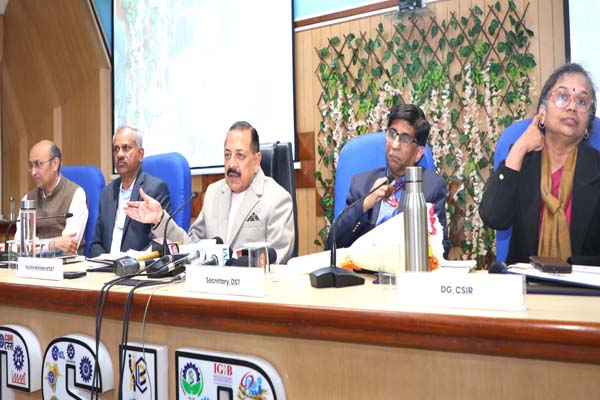
Union Minister of State (Independent Charge) for Science & Technology and Earth Sciences, and Minister of State for PMO, Department of Atomic Energy, Department of Space, Personnel, Public Grievances and Pensions, Dr Jitendra Singh today said that the Union Budget 2026–27 pushes technology-driven AI-integrated structural reforms to shape India’s future and lays down a forward-looking roadmap for the next quarter century.
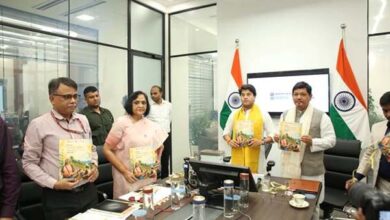
Addressing the media in a post-Budget interaction organised by the Ministry of Science & Technology, the Minister said the Budget may take time to be fully appreciated, but it reflects a clear, sequential vision where structural reforms are powered by cutting-edge technologies, and cutting-edge technologies are increasingly driven by AI. He said this makes the Budget inherently futuristic and places a responsibility on informed stakeholders, including the media, to communicate its long-term benefits to citizens.
Secretary, Department of Science & Technology, Prof. Abhay Karandikar, said the Budget places strong emphasis on science, technology, and innovation, with the term “technology” appearing repeatedly in the Finance Minister’s speech. He announced the creation of two mega science R&D infrastructure facilities, a 30-metre National Large Optical Telescope, and a National Large Solar Telescope near Pangong Lake, which will complement India’s space and solar missions and significantly enhance global scientific collaboration.
Secretary, Department of Biotechnology, Dr Rajesh S. Gokhale, said the Biopharma Shakti programme builds on the successful National Biopharma Mission and will accelerate translation of research into manufacturing. He said the initiative strengthens industry-academia partnerships, shared infrastructure, clinical trial networks, and vaccine development, while also integrating biotechnology-based carbon utilisation technologies.
Secretary, Ministry of Earth Sciences, Dr M. Ravichandran, outlined key initiatives under the Blue Economy, including expansion of national waterways, coastal tourism, offshore and deep-sea fisheries, and sustainable shipping. He said new policies permitting fishing beyond territorial waters and in high seas will open significant economic opportunities while ensuring environmental responsibility.
Director General, CSIR and Secretary, DSIR, Dr N. Kalaiselvi, said CSIR will play a central role across multiple Budget initiatives, including CCUS, semiconductors, critical minerals, rare earth magnets, clean energy, and advanced manufacturing. She said CSIR laboratories have been designated as centres of excellence for critical metals and minerals, aligning national research capabilities with industrial and strategic needs.(UPDATED ON 2ND FEBRUARY 2026)