Ministry of Minority Affairs signed MoU with IIT Patna
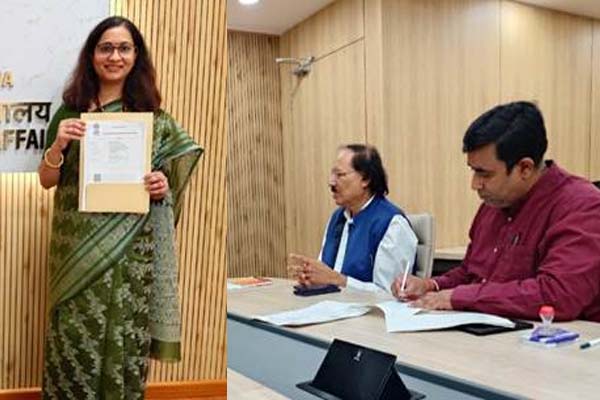
Marking a significant step towards future-ready skilling, the Ministry of Minority Affairs has signed a Memorandum of Understanding (MoU) with the Indian Institute of Technology (IIT), Patna under the PM VIKAS (Pradhan Mantri Virasat Ka Samvardhan) Scheme.
The MoU was exchanged in the presence of Ms. Neha Giri, Director, Ministry of Minority Affairs, Prof. T. N. Singh, Director, IIT Patna, and senior officials from both institutions.
Under this strategic collaboration, 600 minority youth from the State of Bihar will be trained by IIT Patna in emerging and high-demand job roles such as AI Technocrat and Business Analytics Executive. The training programme is designed to equip participants with industry-relevant skills aligned with evolving market needs.
Notably, this collaboration builds on the Ministry’s continued efforts under the PM VIKAS Scheme. Last week, the Ministry of Minority Affairs also signed MoUs with the Indian Institute of Technology, Dharwad; National Institute of Technology, Manipur; CSIR–Central Mechanical Engineering Research Institute, Durgapur; and Arunachal Pradesh Forest Corporation Ltd., further expanding its network of premier institutions for delivering high-quality, industry-oriented skill development programmes.
(UPDATED ON 20TH APRIL 2026)